Real-Time Threat Intelligence: Strengthening Your Security Posture with Seceon

Real-Time Threat Intelligence: Strengthening Your Security Posture with Seceon

In today’s rapidly evolving cybersecurity landscape, organizations face an unprecedented volume of sophisticated threats that can compromise their digital assets within seconds. Real-time threat intelligence has emerged as a critical defense mechanism, enabling security teams to detect, analyze, and respond to cyber threats before they cause significant damage. The Seceon platform leverages advanced threat intelligence capabilities to provide comprehensive protection against modern cyberattacks.

What is Real-Time Threat Intelligence?

Real-time threat intelligence refers to the continuous collection, analysis, and dissemination of information about current and emerging cybersecurity threats as they occur. Unlike traditional security approaches that rely on historical data, real-time threat intelligence provides immediate insights into:

  • Active attack patterns and methodologies
  • Newly discovered vulnerabilities and exploits
  • Malicious IP addresses, domains, and file hashes
  • Threat actor tactics, techniques, and procedures (TTPs)
  • Zero-day vulnerabilities and emerging attack vectors
  • Indicators of compromise (IoCs) from global threat feeds

The Critical Importance of Real-Time Threat Intelligence

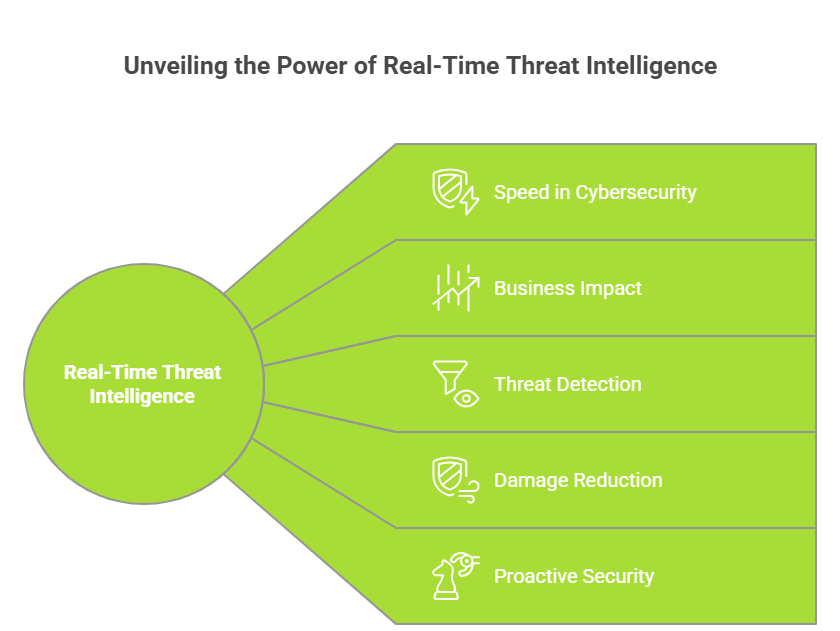
Speed Matters in Cybersecurity

Cyber threats evolve at lightning speed, with attackers often moving from initial compromise to data exfiltration in minutes or hours. Real-time threat intelligence enables organizations to:

  • Detect threats at the earliest possible stage of the attack lifecycle
  • Reduce dwell time of attackers within the network infrastructure
  • Minimize potential damage and data loss from security incidents
  • Stay ahead of rapidly evolving threat landscapes
  • Enable proactive rather than reactive security measures

The Business Impact

The consequences of delayed threat detection can be devastating for organizations, including financial losses, regulatory penalties, reputational damage, and operational disruptions. Real-time threat intelligence helps protect:

  • Sensitive customer and employee data
  • Intellectual property and trade secrets
  • Financial assets and transaction systems
  • Brand reputation and customer trust
  • Operational continuity and business processes

How Seceon’s Real-Time Threat Intelligence Works

Comprehensive Threat Feed Integration

The Seceon platform integrates multiple threat intelligence sources to provide comprehensive coverage:

  • Global threat intelligence feeds from leading security vendors
  • Open-source intelligence (OSINT) from security research communities
  • Commercial threat intelligence databases and services
  • Industry-specific threat intelligence sharing networks
  • Government and law enforcement threat advisories
  • Dark web monitoring for stolen credentials and attack planning

Advanced Machine Learning and AI

Seceon employs sophisticated artificial intelligence and machine learning algorithms to:

  • Analyze massive volumes of security data in real-time
  • Identify patterns and anomalies indicative of malicious activity
  • Correlate threat indicators across multiple data sources
  • Predict potential attack vectors before they’re exploited
  • Automatically prioritize threats based on risk and severity
  • Reduce false positives through intelligent threat validation

Automated Threat Correlation

The platform’s correlation engine connects disparate security events to reveal the complete attack story:

  • Cross-references security alerts with known threat indicators
  • Maps attack behaviors to the MITRE ATT&CK framework
  • Identifies multi-stage attack campaigns across the kill chain
  • Links seemingly unrelated security events into coherent incidents
  • Provides contextual information for faster investigation
  • Enables security teams to understand the full scope of threats

Key Features of Seceon’s Real-Time Threat Intelligence

Continuous Monitoring and Analysis

  • 24/7 automated monitoring of network traffic, endpoints, and cloud environments
  • Real-time analysis of security logs from firewalls, IDS/IPS, and security tools
  • Continuous threat hunting capabilities to proactively identify hidden threats
  • Behavioral analysis to detect anomalous user and entity activities
  • Streaming analytics for immediate threat detection and response

Actionable Threat Intelligence

  • Contextual threat information with clear risk assessments
  • Prioritized alerts based on organizational impact and urgency
  • Detailed attack attribution and threat actor profiling
  • Recommended remediation actions for each identified threat
  • Integration with incident response workflows and playbooks

Threat Intelligence Sharing

  • Bidirectional sharing with threat intelligence platforms (TIP)
  • Integration with industry-specific ISACs and sharing communities
  • Contribution to collective defense through anonymized threat data
  • Collaboration features for security team coordination
  • API access for custom threat intelligence integrations

Benefits of Implementing Real-Time Threat Intelligence with Seceon

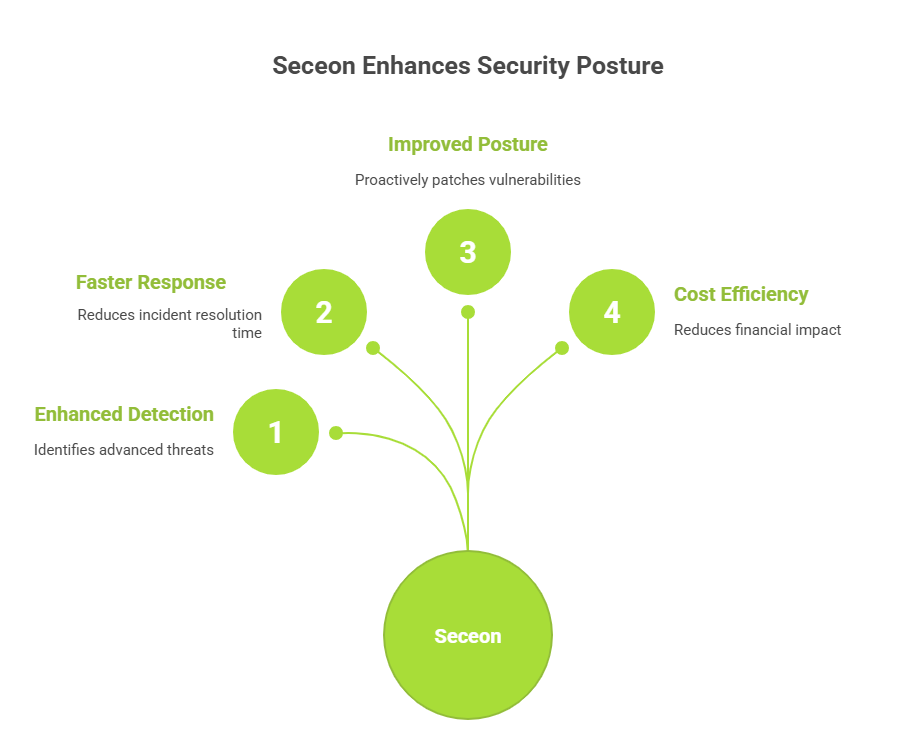
Enhanced Threat Detection

  • Identify threats that traditional signature-based tools miss
  • Detect zero-day exploits and advanced persistent threats (APTs)
  • Discover insider threats and compromised user accounts
  • Recognize lateral movement and data exfiltration attempts
  • Catch sophisticated malware and ransomware before encryption

Faster Incident Response

  • Reduce mean time to detect (MTTD) from days to minutes
  • Decrease mean time to respond (MTTR) through automation
  • Enable security analysts to make informed decisions quickly
  • Automate containment actions for known threat patterns
  • Streamline investigation workflows with enriched context

Improved Security Posture

  • Proactively patch vulnerabilities before they’re exploited
  • Strengthen security controls based on current threat landscape
  • Optimize security tool configurations for maximum effectiveness
  • Reduce attack surface through continuous risk assessment
  • Demonstrate compliance with regulatory security requirements

Cost Efficiency

  • Reduce the financial impact of security breaches
  • Lower operational costs through automation and efficiency
  • Minimize the need for extensive manual threat analysis
  • Prevent costly downtime and business interruptions
  • Optimize security team productivity and resource allocation

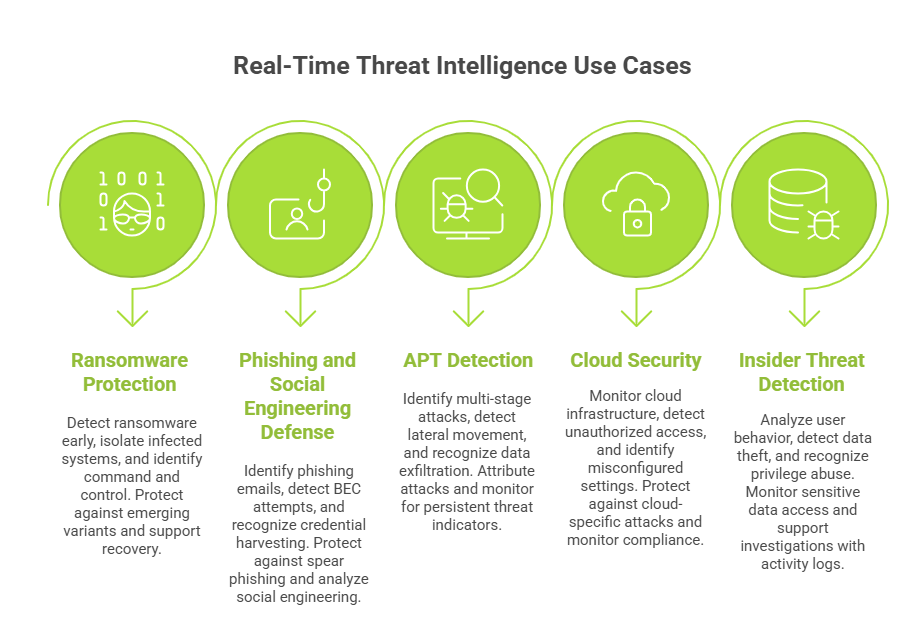
Real-Time Threat Intelligence Use Cases

Ransomware Protection

  • Early detection of ransomware indicators and behaviors
  • Automated isolation of infected systems before encryption spreads
  • Identification of ransomware command and control communications
  • Protection against emerging ransomware variants and families
  • Recovery support through detailed attack timeline reconstruction

Phishing and Social Engineering Defense

  • Real-time identification of phishing emails and malicious URLs
  • Detection of business email compromise (BEC) attempts
  • Recognition of credential harvesting campaigns
  • Protection against spear phishing targeting executives
  • Analysis of social engineering tactics and patterns

Advanced Persistent Threat (APT) Detection

  • Identification of sophisticated, multi-stage attack campaigns
  • Detection of stealthy lateral movement within networks
  • Recognition of data staging and exfiltration activities
  • Attribution of attacks to known threat actor groups
  • Long-term monitoring for persistent threat indicators

Cloud Security

  • Real-time monitoring of cloud infrastructure and SaaS applications
  • Detection of unauthorized access to cloud resources
  • Identification of misconfigured cloud security settings
  • Protection against cloud-specific attack vectors
  • Compliance monitoring for cloud environments

Insider Threat Detection

  • Behavioral analysis to identify anomalous user activities
  • Detection of data theft by malicious or compromised insiders
  • Recognition of privilege abuse and unauthorized access
  • Monitoring of sensitive data access patterns
  • Investigation support with detailed user activity logs

Best Practices for Leveraging Real-Time Threat Intelligence

Establish Clear Objectives

  • Define specific security goals and threat intelligence requirements
  • Identify critical assets and high-priority threats for your organization
  • Determine key performance indicators (KPIs) for threat intelligence effectiveness
  • Align threat intelligence initiatives with business risk management
  • Create a threat intelligence strategy document

Implement Continuous Improvement

  • Regularly review and update threat intelligence sources
  • Tune detection rules based on environmental feedback
  • Conduct post-incident reviews to improve detection capabilities
  • Stay informed about emerging threats and attack techniques
  • Participate in security community forums and information sharing

Foster Security Team Collaboration

  • Establish clear roles and responsibilities for threat intelligence
  • Create communication channels for threat information sharing
  • Conduct regular threat briefings and security awareness sessions
  • Encourage collaboration between SOC analysts and threat hunters
  • Develop cross-functional incident response procedures

Integrate with Security Ecosystem

  • Ensure threat intelligence feeds into all security tools
  • Automate threat indicator distribution across security stack
  • Create seamless workflows between detection and response systems
  • Leverage APIs for custom threat intelligence integrations
  • Maintain consistent threat data across security platforms

The Future of Real-Time Threat Intelligence

As cyber threats continue to evolve in sophistication and scale, real-time threat intelligence will become increasingly critical for organizational security. Future developments include:

  • Enhanced artificial intelligence for predictive threat analysis
  • Deeper integration of threat intelligence with autonomous response systems
  • Improved threat intelligence sharing across industries and sectors
  • Greater emphasis on threat actor attribution and proactive defense
  • Integration of quantum computing for advanced threat analysis

Conclusion

Real-time threat intelligence represents a fundamental shift from reactive to proactive cybersecurity. The Seceon platform empowers organizations with the visibility, insights, and automation needed to stay ahead of evolving threats. By leveraging continuous monitoring, advanced analytics, and comprehensive threat intelligence feeds, security teams can detect and respond to threats faster, reduce risk exposure, and protect critical business assets.

In an environment where the question is not if but when your organization will be targeted, real-time threat intelligence provides the competitive advantage needed to defend against sophisticated adversaries. With Seceon’s comprehensive threat intelligence capabilities, organizations can transform their security operations from constant firefighting to strategic, intelligence-driven defense.

Ready to enhance your security posture with real-time threat intelligence? Discover how Seceon can help your organization stay ahead of cyber threats and protect what matters most.

Footer-for-Blogs-3

Leave a Reply

Your email address will not be published. Required fields are marked *

Categories

Seceon Inc
Privacy Overview

This website uses cookies so that we can provide you with the best user experience possible. Cookie information is stored in your browser and performs functions such as recognising you when you return to our website and helping our team to understand which sections of the website you find most interesting and useful.