As cybersecurity leaders look to the second half of 2025, it’s clear that defending modern infrastructure is no longer just about blocking malware or patching systems—it’s about keeping pace with a threat landscape that’s evolving faster than most organizations can respond.
During Seceon’s Innovation & Certification Days, I had the opportunity to present insights drawn from leading industry reports by SonicWall, Fortinet, Logically, and Tines—highlighting where attackers are advancing, how defenders are under pressure, and why the shift to unified security platforms is becoming mission-critical.
Threat intelligence reports show a continued rise in ransomware activity, with shorter dwell times, faster encryption, and increasingly targeted delivery. Credential-based intrusions—like phishing, BEC, and lateral movement via stolen accounts—remain persistent. Meanwhile, cloud misconfigurations and insider risks are keeping security teams on high alert.
These aren’t just isolated events—they represent a shift in how attackers operate, often using automation and toolkits that can scale across industries and geographies.
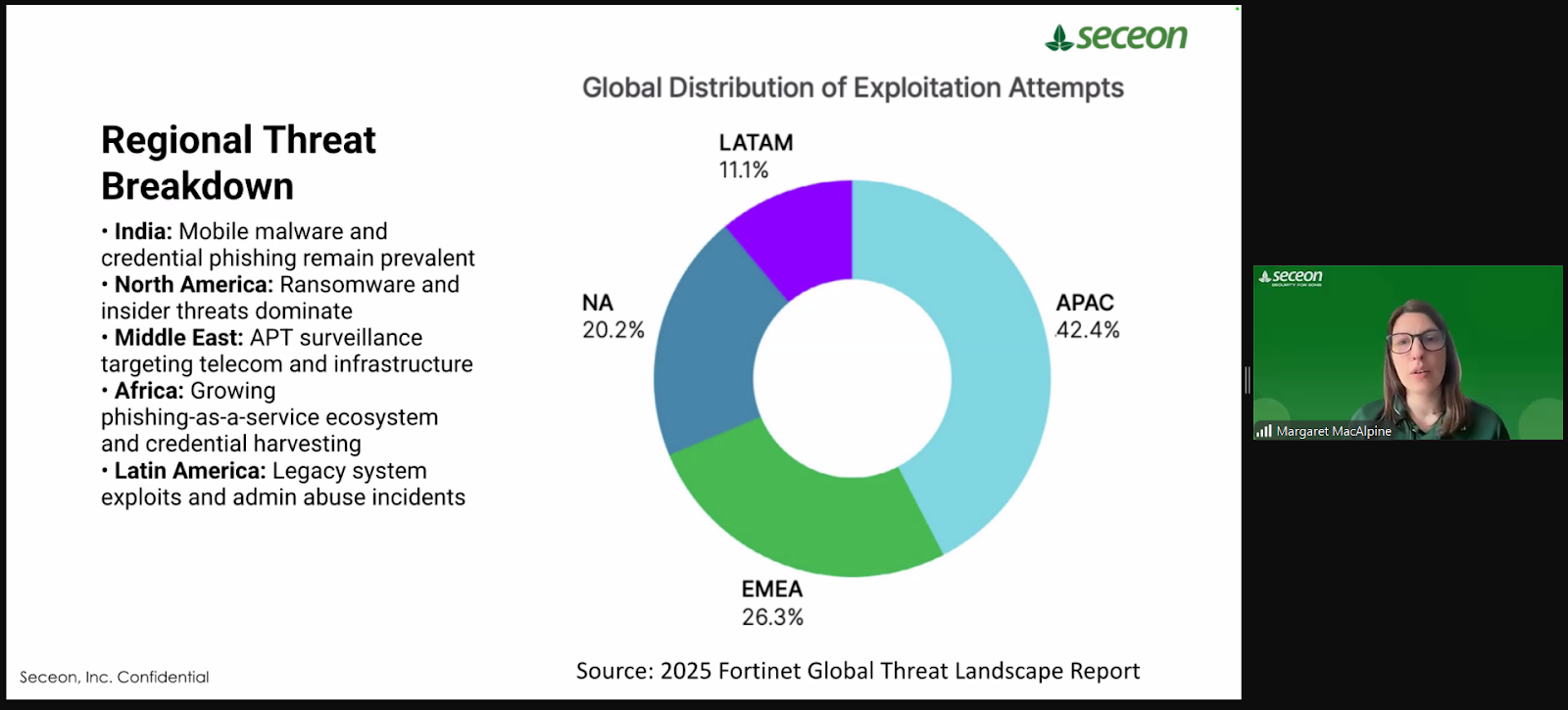
Cyber threats don’t look the same everywhere. While attackers may share techniques, their exploitation strategies are often shaped by regional infrastructure and digital ecosystems.
Industry research highlights the following regional trends:
It’s important to emphasize: these trends are sourced from external research and should serve as conversation starters—not assumptions. Every organization experiences the threat landscape differently, and this type of regional analysis can help identify emerging risks early.
According to Tines’ Voice of the SOC Analyst report, 71% of analysts report burnout—largely driven by alert fatigue, manual triage, and fragmented workflows. Many teams are working harder than ever, but with limited capacity to focus on real threats.
The growing gap between how fast attackers can move and how quickly defenders can respond is now an operational issue as much as a technical one.
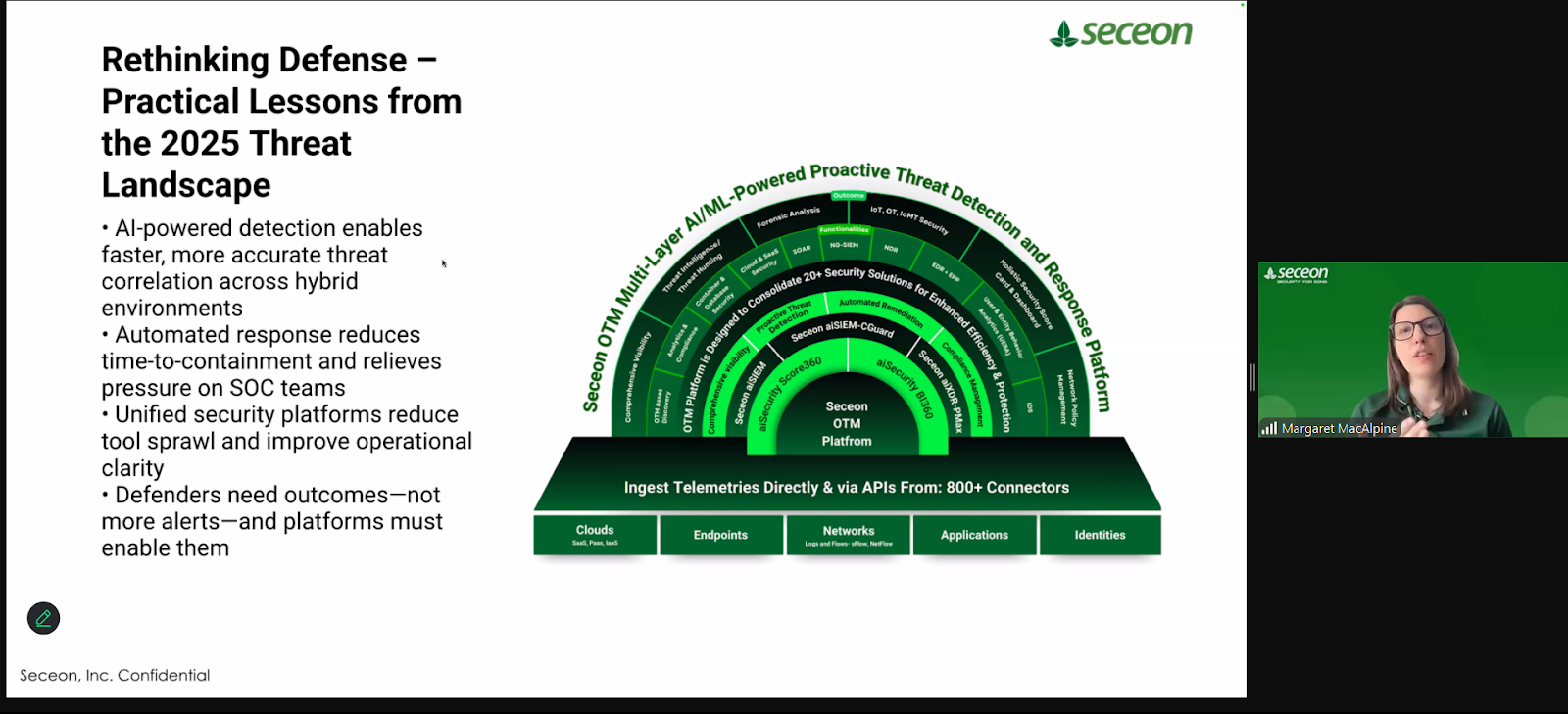
One message echoed across recent threat reports and industry discussions is this: defenders need integrated, intelligent solutions that reduce noise and increase visibility.
Unified platforms that combine SIEM, SOAR, XDR, and security analytics in one ecosystem are gaining traction—not just for efficiency, but to help teams keep up with adversaries who are already embracing AI and automation.
At Seceon, that’s exactly the challenge we’ve been building toward. Our aiXDR platform is designed to simplify security operations, surface real threats faster, and give defenders back control.
If you missed the presentation, we’d be happy to connect. Whether you want access to the slides, a copy of the referenced threat reports, or a deeper look at how Seceon Inc. is helping MSPs and enterprises address these exact challenges—we’re here to continue the conversation.
The threat landscape is changing fast. We believe your defense strategy should evolve even faster.