
The digital landscape is evolving at a rapid pace, and so are the threats that target organizations. With cyberattacks becoming more sophisticated and diverse, traditional security solutions often struggle to keep up. Businesses today need a more unified, proactive, and intelligent approach to detect and respond to threats. This is where Extended Detection and Response (XDR) comes into play.
XDR is an integrated security solution that unifies multiple security products into a single platform, offering comprehensive detection, investigation, and response capabilities across endpoints, networks, servers, and other IT environments. With the rise of advanced persistent threats (APTs), insider threats, and the increasing complexity of modern networks, XDR provides organizations with the visibility and tools they need to identify and mitigate threats faster and more effectively than traditional security solutions.
In this guide, we will explore what Extended Detection and Response (XDR) is, how it works, and why it’s crucial for modern organizations. We will also look at how Seceon leverages XDR to provide businesses with cutting-edge cybersecurity protection, helping them stay one step ahead of evolving cyber threats.
Extended Detection and Response (XDR) is an integrated cybersecurity solution that unifies and correlates data from various security tools—such as endpoint detection and response (EDR), network traffic analysis (NTA), security information and event management (SIEM), and user and entity behavior analytics (UEBA)—to provide comprehensive detection, investigation, and automated response capabilities across an organization’s entire IT environment.
Unlike traditional security systems, which operate in silos (i.e., isolated tools for different parts of the infrastructure), XDR provides a holistic view of an organization’s security posture by correlating data from endpoints, network traffic, cloud systems, and more. This enables security teams to quickly detect, investigate, and respond to complex attacks across all layers of the IT infrastructure.
Endpoint Detection and Response (EDR)
EDR tools focus on detecting and responding to malicious activities on endpoints such as laptops, servers, and mobile devices. EDR solutions provide real-time monitoring of endpoint activities, enabling security teams to detect, analyze, and respond to threats on the endpoint level.
Network Traffic Analysis (NTA)
NTA solutions analyze network traffic to identify abnormal behaviors or suspicious communication patterns that may indicate an ongoing attack. By correlating data from multiple sources, NTA helps detect threats that bypass endpoint defenses, such as lateral movement within the network or data exfiltration attempts.
Security Information and Event Management (SIEM)
SIEM systems aggregate and analyze security event data from various sources to provide real-time insights into the security posture of the organization. SIEM solutions often serve as the foundation for incident detection and response, offering centralized visibility and monitoring.
User and Entity Behavior Analytics (UEBA)
UEBA solutions use machine learning and behavioral analytics to detect anomalies in user and entity behavior. This helps identify insider threats, compromised accounts, or abnormal access patterns that might otherwise go undetected by traditional security tools.
Threat Intelligence Integration
XDR platforms integrate threat intelligence feeds, allowing organizations to stay informed about emerging threats, attack techniques, and tactics. By leveraging up-to-date intelligence, security teams can better prepare for new attack vectors and mitigate risks effectively.
The Benefits of Extended Detection and Response (XDR)
As cyber threats become increasingly sophisticated, organizations need to take a more integrated, intelligent, and automated approach to cybersecurity. XDR is designed to provide organizations with a unified solution that improves detection, reduces response times, and enhances overall security efficiency.
1. Holistic Security Visibility
One of the primary benefits of XDR is its ability to provide holistic visibility into an organization’s entire security infrastructure. By integrating data from multiple sources—such as endpoints, networks, cloud services, and identity management systems—XDR platforms offer security teams a comprehensive view of potential risks. This consolidated view allows teams to identify threats that might otherwise go undetected by standalone tools, such as multi-stage attacks or lateral movement across the network.
Traditional security solutions operate in silos, making it difficult to detect advanced attacks that span multiple environments. XDR breaks down these silos by aggregating data across endpoints, networks, and servers, providing security professionals with a unified view of the attack landscape.
2. Faster Threat Detection and Response
XDR enhances threat detection by correlating data from different sources and using machine learning and AI-driven analytics to identify suspicious patterns of activity. This allows security teams to detect attacks in real time, even those that attempt to bypass traditional defenses. By providing faster detection and automated responses, XDR reduces the time to containment, minimizing the impact of cyberattacks.
For instance, if a threat actor attempts to use lateral movement to escalate privileges or move across systems, XDR systems will detect the abnormal activity, analyze its context, and trigger an automated response, such as isolating the compromised endpoint or blocking malicious network traffic.
3. Reduced Security Tool Fatigue
Many organizations use a patchwork of security tools that generate a significant volume of alerts. This can lead to alert fatigue, where security teams are overwhelmed by too many notifications and struggle to prioritize critical threats. XDR addresses this challenge by correlating alerts from multiple security solutions, reducing the noise and enabling security teams to focus on high-priority incidents.
Moreover, XDR integrates automated response capabilities, allowing security teams to act on the most critical alerts without needing manual intervention. This automation reduces the burden on security analysts and improves response times, ensuring that organizations can respond to threats faster and more efficiently.
4. Improved Incident Investigation and Forensics
In the event of a security incident, XDR makes it easier to investigate and understand the scope of the attack. By correlating data across endpoints, network traffic, and user activities, XDR provides detailed insights into how an attack unfolded, which systems were affected, and the extent of the damage.
This level of visibility is crucial for conducting thorough investigations and understanding the tactics, techniques, and procedures (TTPs) used by attackers. With this information, organizations can improve their defenses and prevent future attacks.
5. Simplified Security Management
Managing multiple, disparate security tools can be a complex and time-consuming task. XDR simplifies security management by consolidating various security functions—such as threat detection, incident response, and threat intelligence—into a single platform. This unified approach not only streamlines operations but also reduces the complexity associated with managing different security tools.
Moreover, XDR platforms typically offer a centralized management console, allowing security teams to monitor and respond to threats from a single interface. This reduces the need for multiple consoles and facilitates more efficient security operations.
How Seceon Enhances Cybersecurity with XDR
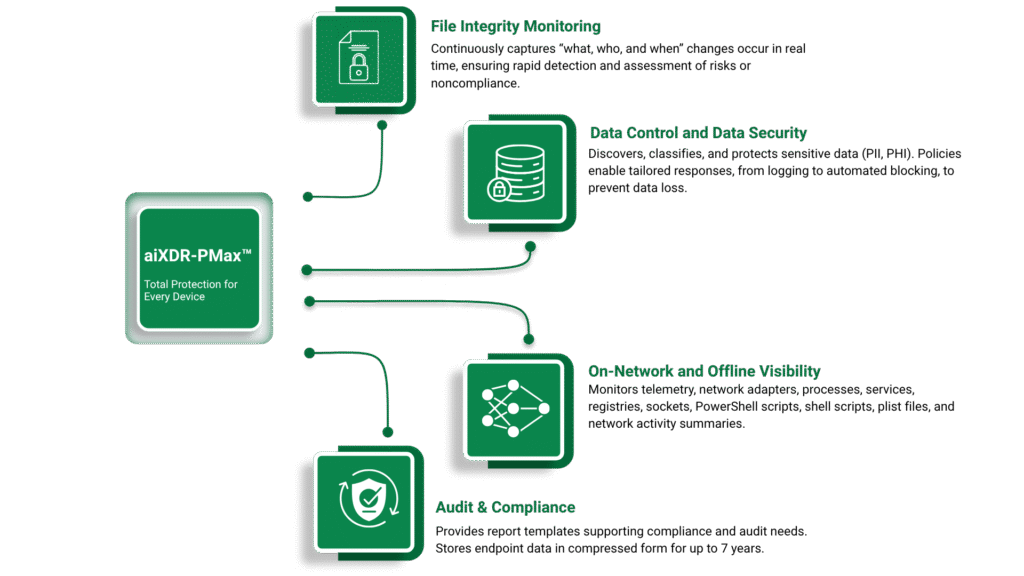
Seceon’s AI-driven cybersecurity platform incorporates Extended Detection and Response (XDR) to offer organizations a unified, intelligent, and automated solution for detecting and responding to advanced threats. With its powerful AI, machine learning, and behavioral analytics capabilities, Seceon’s XDR solution provides a robust defense against the evolving threat landscape.
Key Features of Seceon’s XDR Solution:
Comprehensive Threat Detection:
Seceon’s XDR solution aggregates data from a wide range of sources, including endpoints, networks, cloud environments, and user behavior, to provide deep visibility into potential threats. Powered by AI and machine learning, Seceon can detect a wide variety of attack types, from traditional malware to more advanced threats like fileless attacks, zero-day vulnerabilities, and ransomware.
Automated Incident Response:
Seceon’s platform offers automated response capabilities that can take immediate action in response to detected threats. Automated responses include actions such as isolating infected devices, blocking malicious IP addresses, or terminating compromised user sessions. This rapid response helps minimize the impact of attacks and ensures that security teams can focus on higher-priority tasks.
Unified Security Monitoring:
Seceon’s XDR platform provides a centralized dashboard that aggregates security data from multiple sources. This unified view makes it easier for security teams to monitor activity across their entire infrastructure, improving detection accuracy and reducing response times.
Real-Time Threat Intelligence:
Seceon integrates real-time threat intelligence to provide up-to-date information about emerging threats and attack techniques. This allows security teams to stay ahead of attackers and prepare for the latest threats, while also enabling the system to recognize and respond to new tactics used by adversaries.
Advanced Forensics and Investigation:
Seceon’s XDR platform provides detailed forensic data about detected incidents, allowing security teams to investigate the nature and origin of the attack. By correlating data from endpoints, network traffic, and user behavior, Seceon helps organizations understand how attacks unfold, enabling them to improve their defenses.
Scalability and Flexibility:
Seceon’s XDR solution is designed to scale with the needs of modern organizations. Whether you are a small business or a large enterprise, Seceon’s platform can adapt to your unique security requirements, providing consistent protection across all environments—on-premises, cloud, and hybrid.
Why XDR is Essential for Modern Organizations
In today’s rapidly evolving threat landscape, traditional security tools are often inadequate to handle advanced cyber threats. XDR represents the next step in the evolution of cybersecurity, offering organizations a more effective, unified, and intelligent approach to detecting and responding to incidents.
With its AI-driven detection, automated response, and comprehensive visibility, XDR enables organizations to stay ahead of attackers, reduce the time to respond to incidents, and improve overall security posture. As cyber threats become more sophisticated, embracing Extended Detection and Response is no longer optional—it is a strategic necessity for any organization that wants to protect its critical assets and data.
Conclusion
The increasing complexity of cyber threats, coupled with the growing volume of security data, makes traditional security solutions inadequate for today’s organizations. Extended Detection and Response (XDR) offers a unified, intelligent, and automated approach to cybersecurity, enabling organizations to detect, respond to, and mitigate advanced threats in real time.
Seceon’s XDR platform provides businesses with the tools they need to secure their digital assets and protect against evolving threats. By integrating AI, machine learning, and automated incident response, Seceon helps organizations stay ahead of the curve and safeguard their operations against cyberattacks.
As cyber threats continue to evolve, XDR will play an increasingly critical role in securing modern IT infrastructures. By adopting Seceon’s XDR solution, organizations can ensure comprehensive, scalable protection that adapts to the dynamic nature of today’s threat landscape.
