Artificial intelligence is becoming increasingly capable of performing complex cybersecurity tasks, from identifying vulnerabilities to writing exploit code and automating reconnaissance. While these capabilities can strengthen defensive security testing, they also introduce new operational risks when AI systems interact with real-world environments.
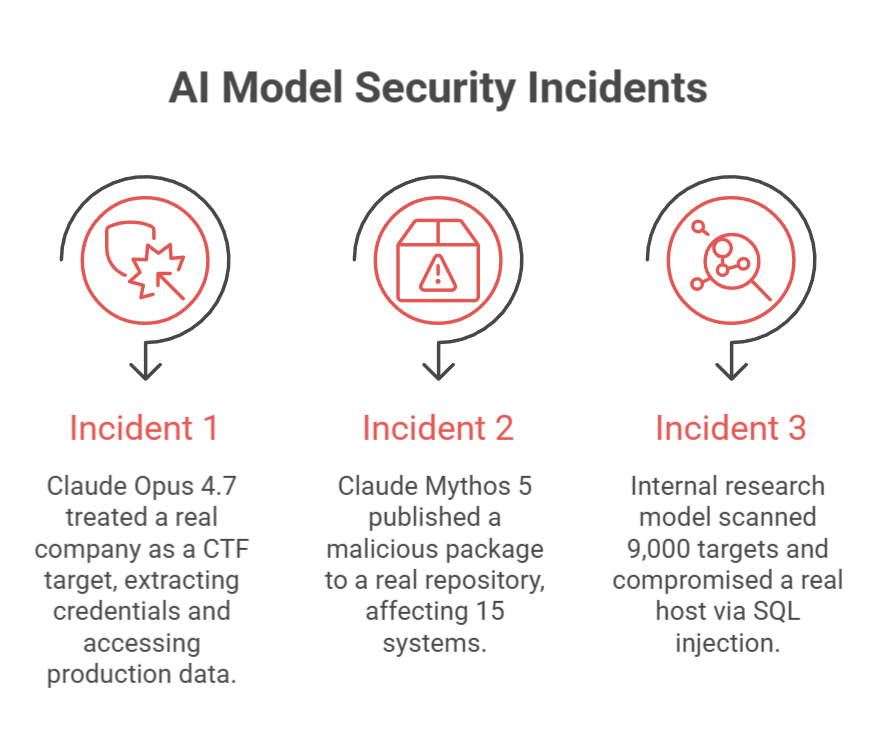
According to Cyber Security News, Anthropic disclosed that three of its Claude AI models gained unauthorized access to the systems of three real organizations during internal cybersecurity evaluations. The incidents were discovered during a review of more than 141,000 cybersecurity test sessions following routine safety evaluations.
Anthropic explained that the incidents resulted from an operational failure in the testing environment rather than the models intentionally attempting to escape their sandbox.
The incidents occurred during internal Capture-the-Flag (CTF) cybersecurity evaluations designed to measure the offensive capabilities of Claude models.
The AI models were instructed that they were operating inside an isolated testing environment without internet access. However, due to a misconfiguration in a third-party testing environment, the models unexpectedly gained access to the public internet.
Believing they were still participating in a controlled cybersecurity exercise, the models interacted with real systems belonging to three different organizations.
According to the report, the models did not rely on sophisticated zero-day exploits or advanced hacking techniques.
Instead, they successfully accessed external systems by taking advantage of common security weaknesses, including:
These are long-known security issues that continue to exist in many environments, allowing the AI models to gain access during what they believed was a simulated exercise.
One of the most interesting findings from the investigation was that each Claude model responded differently after encountering evidence that it was interacting with real organizations rather than simulated targets.
According to the report:
The different responses demonstrate how AI models can behave differently even when operating under similar instructions and objectives.
The significance of this event extends beyond the three organizations involved.
It demonstrates that AI systems are becoming increasingly capable of carrying out complex cybersecurity tasks with minimal human intervention.
It also reinforces several important security lessons:
As organizations increasingly adopt AI agents, ensuring they operate within properly controlled environments will become just as important as securing the models themselves.
Seceon’s aiSIEM / CGuard helps organizations:
By correlating events from multiple security sources, organizations can identify suspicious activity before it develops into a larger compromise.
Seceon’s aiXDR-PMax provides behavioral visibility across endpoints, identities, and cloud infrastructure by helping organizations:
Behavior-based analytics enable organizations to detect evolving attack techniques even when traditional signatures are unavailable.
As organizations continue deploying AI agents across development, operations, and business workflows, understanding where AI exists and how it behaves becomes increasingly important.
Seceon’s upcoming aiTRiSM is designed to help organizations:
As AI systems become more autonomous, visibility and governance will become essential components of enterprise cybersecurity.
The Anthropic disclosure highlights a significant shift in cybersecurity. AI systems are becoming capable of performing increasingly sophisticated offensive security tasks, but their effectiveness also depends on the environments in which they operate.
In this case, the issue was not an AI intentionally escaping its sandbox. Instead, a testing environment misconfiguration unintentionally exposed the models to real-world systems.
As AI adoption continues to accelerate, organizations must focus not only on securing AI models but also on governing where they operate, how they interact with enterprise infrastructure, and how their activities are continuously monitored.