In today’s rapidly evolving digital ecosystem, enterprises are accelerating innovation through cloud adoption, edge computing, encrypted digital communication, and distributed workforces. Yet this transformation comes with a critical warning: the rise of quantum computing is poised to break traditional encryption, exposing sensitive data, critical infrastructure, and digital identities. Global studies indicate that more than 50% of encrypted corporate data could be decrypted by quantum systems in the next decade, and threat actors have already begun engaging in “harvest now, decrypt later” (HNDL) tactics-stealing encrypted data today to decrypt it when quantum capabilities mature.
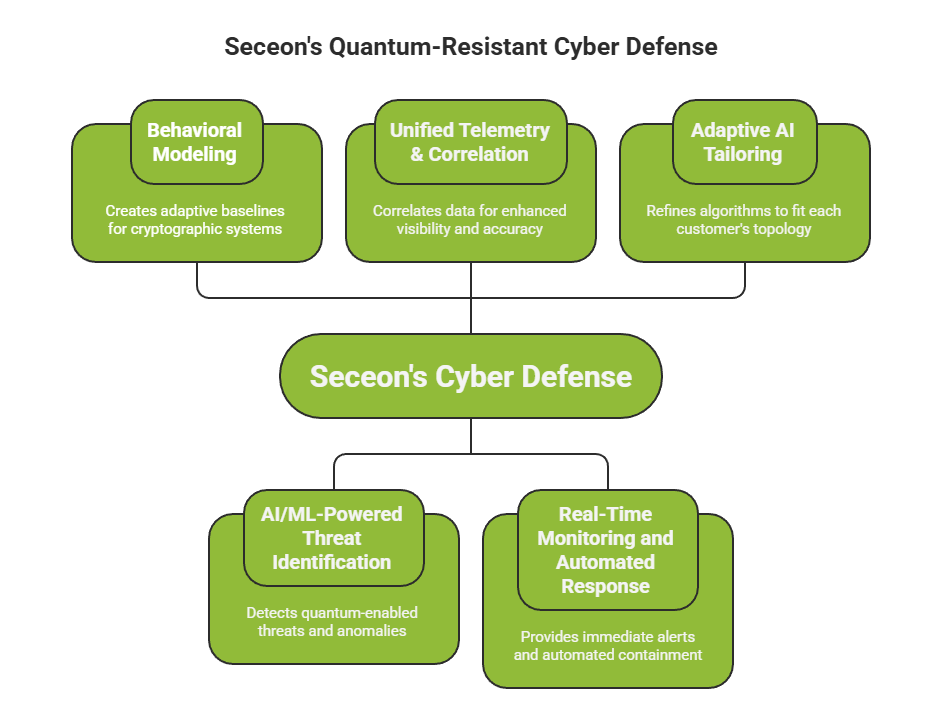
Traditional cybersecurity controls, even when supported by standard encryption and manual monitoring, cannot withstand this shift. Organizations now require AI-driven, quantum-resistant cyber defense that continuously analyzes behavior, detects post-quantum threats early, and transitions enterprises toward secure cryptographic standards.A key innovation leading this transformation is Seceon’s AI-driven, quantum-resilient threat detection platform, which unifies behavioral analytics, AI/ML engines, telemetry correlation, and automated response-helping organizations build a future-ready cyber defense posture against both classical and quantum-era threats.
What is Quantum-Resistant Cyber Defense?
Quantum-resistant cyber defense refers to the strategies, systems, and AI-powered mechanisms designed to protect digital assets against adversaries equipped with quantum computing capabilities. It includes:
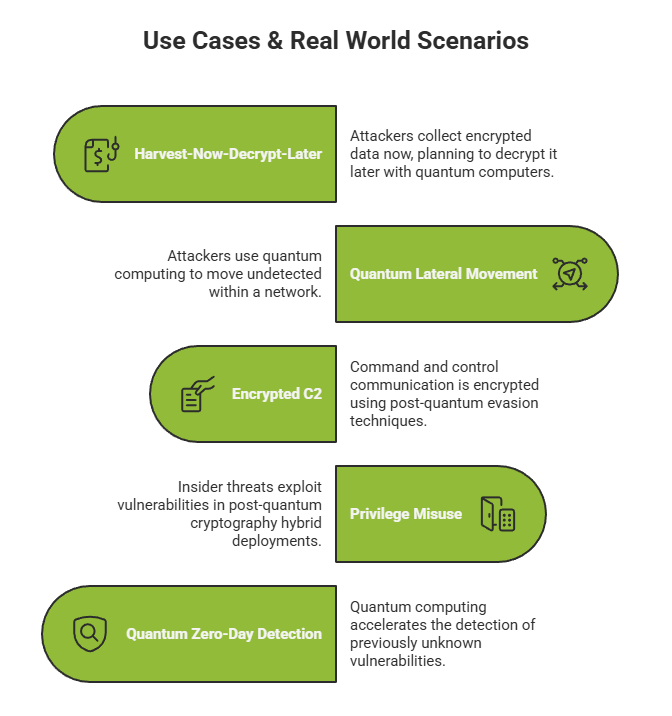
Identifying and mitigating “harvest now, decrypt later” attacks across encrypted channels.
Transitioning from classical cryptographic algorithms (RSA, ECC) to post-quantum cryptography (PQC) standards recommended by NIST.
Monitoring quantum-capable adversarial behavior, such as large-scale key inference or quantum-enabled lateral movement.
Protecting hybrid environments-cloud, on-prem, edge, IoT, and remote endpoints-from AI-accelerated and quantum-powered attacks.
Detecting anomalies in communications that hint at cryptographic exploitation, C2 channels, or algorithmic weaknesses.
This proactive, future-proofed approach ensures enterprises stay resilient even as adversaries gain unprecedented computational power.
Why Quantum-Resistant Defense Matters for the SOC
1. Early Detection of Quantum-Enabled Cryptographic Threats
Global security assessments reveal that attackers are actively collecting encrypted data for future quantum decryption. SOC teams must uncover:
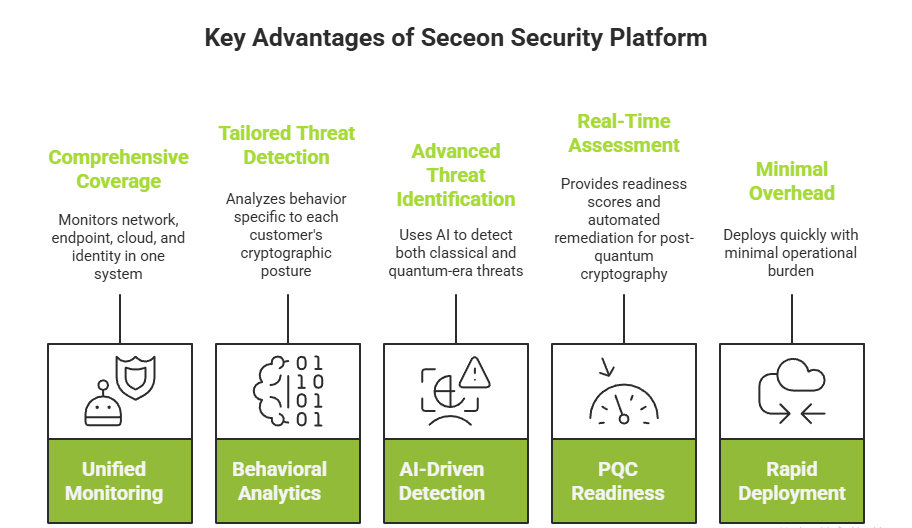
Unified quantum-resilient monitoring across network, endpoint, cloud & identity
Behavioral analytics tuned to each customer’s cryptographic posture
AI-driven detection that catches classical + quantum-era threats
Real-time PQC readiness scores and automated remediation
Rapid deployment with minimal operational overhead
Seceon empowers organizations to shift from reactive defenses to quantum-proof, AI-enhanced cyber resilience-a necessity in today’s rapidly approaching post-quantum reality.
Conclusion
Quantum computing is reshaping the cybersecurity landscape, and organizations cannot rely on traditional defenses alone. A proactive shift toward AI-enhanced quantum-resistant cyber defense is essential to secure data, identities, and critical infrastructure.
Seceon delivers the advanced analytics, unified telemetry, and automated response capabilities required to defend enterprises against both today’s sophisticated attacks and tomorrow’s quantum-powered threats.
Enterprises preparing to strengthen their SOCs and ensure post-quantum readiness will find in Seceon the expertise, technology, and future-proofed security intelligence needed to stay ahead of adversaries.