Best SMB Cybersecurity Solutions Compared for 2026: How to Choose Cybersecurity Solutions for Small and Medium-Sized Businesses
Quick answer
The best cybersecurity solutions for small and medium-sized businesses protect three core layers (endpoints, network, and data) without requiring a large security team. Leading options include Microsoft Defender for Business, CrowdStrike Falcon, SentinelOne, Sophos, Bitdefender, ESET, Fortinet, WatchGuard, Huntress, and Seceon. Point products work for a single control, but growing SMBs increasingly choose unified platforms that combine endpoint protection, network security, data protection, SIEM, and automated response in one console, often delivered through a managed service provider. Seceon stands out for mid-market teams that want enterprise-grade, AI-driven protection with predictable, asset-based pricing.
Small and mid-sized businesses face the same attackers as large enterprises: ransomware groups, phishing and business email compromise, and credential theft. The difference is resources. Most SMBs have a small IT team, limited security expertise, and budgets that cannot absorb a new tool for every threat.
That makes small business cybersecurity a design problem as much as a product decision. This guide compares leading SMB security software across endpoint, network, and data protection, explains the criteria that matter at the decision stage, and shows where a unified platform like Seceon delivers more value.
Why SMB Cybersecurity Requires a Different Approach
A typical SMB may run separate tools for antivirus, firewall, email filtering, backup, and logging. Each has its own console, alerts, and renewal. With one or two people covering IT and security, alerts go unreviewed and gaps appear between tools.
SMBs are often suppliers to larger enterprises. Attackers use them as an entry point, and enterprise customers now ask suppliers to prove their security controls through questionnaires and contract terms.
Insurers and regulators increasingly expect controls such as multi-factor authentication, endpoint detection and response, log retention, and incident response capability. SMBs need evidence, not just tools.
Pricing that scales with data volume or requires add-on modules makes budgeting difficult as the business grows. SMBs benefit from simple, predictable licensing.
A large share of SMB security is delivered by managed service providers. The platform must work well for the provider as well as the business.
What Cybersecurity Solutions for SMBs Must Cover
Quick answer
Effective small business cybersecurity covers three core layers: endpoint protection for laptops, desktops, and servers; network security for office, remote, and cloud traffic; and data protection for files, email, and SaaS. AI-driven detection, automated response, and one console tie the layers together.
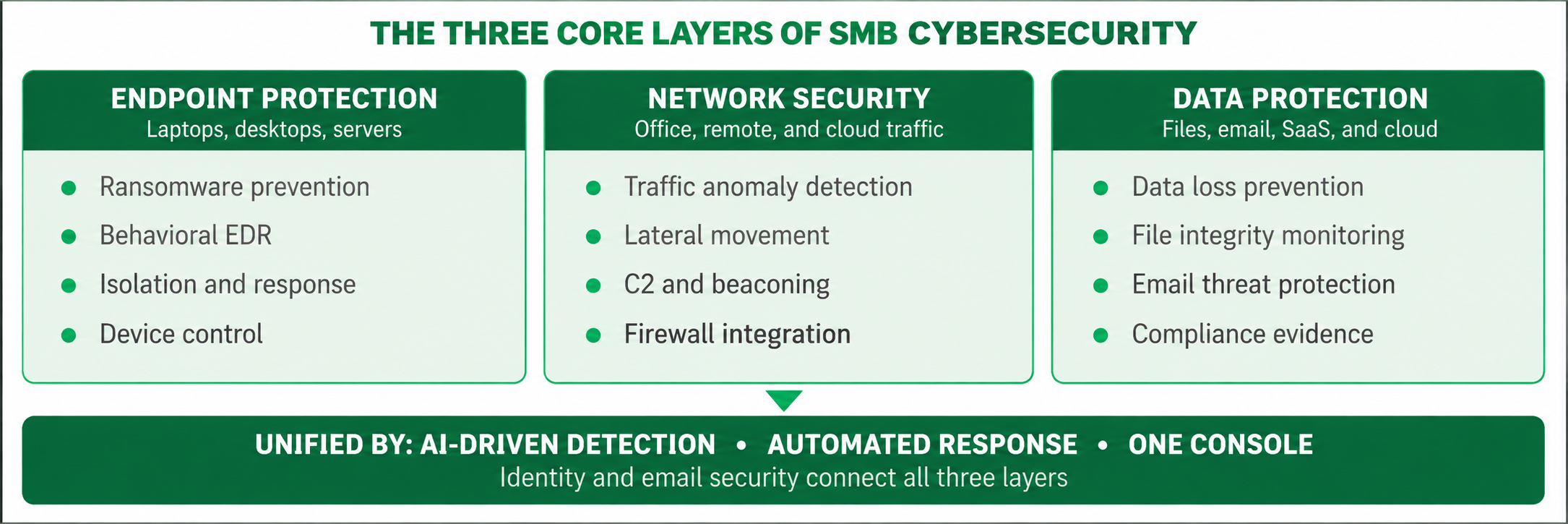
Figure 1. The three core layers of SMB cybersecurity
| Layer | What It Protects Against | Capabilities to Look For |
| Endpoint protection | Ransomware, malware, fileless attacks, credential theft | Behavioral EDR, isolation, automated remediation, device control, lightweight agent |
| Network security | Lateral movement, command-and-control traffic, suspicious remote access | Network traffic analysis, anomaly detection, firewall integration, VPN and remote access monitoring |
| Data protection | Data theft, accidental leakage, insider misuse, file tampering | Data loss prevention, file integrity monitoring, data classification, audit-ready reporting |
| Email and identity (supporting) | Phishing, business email compromise, account takeover | Email threat protection, suspicious login detection, Microsoft 365 and Google Workspace monitoring |
Backup and recovery remain essential alongside these layers; confirm your backup solution integrates with your security platform’s alerts.
Six Criteria for Comparing SMB Security Software
| Criterion | What Good Looks Like | Questions to Ask Vendors |
| 1. Coverage | Endpoint, network, and data protection, with email and identity visibility | Which layers are included, and which require another product? |
| 2. Cyber threat prevention and detection | Behavioral and AI-driven detection that catches unknown threats, not just signatures | How does the platform detect ransomware before encryption? |
| 3. Ease of deployment and management | Cloud-delivered, quick to deploy, one console, minimal tuning | How long until we are fully protected? How many consoles will we use? |
| 4. Automation and managed options | Automated response, plus the option of a fully managed service | Which responses run automatically? Is 24/7 monitoring available through a partner? |
| 5. Pricing predictability | Simple per-user or per-asset pricing, with core modules included | Are there ingestion charges or paid add-ons for SIEM, SOAR, or compliance? |
| 6. Room to grow | Scales from SMB to mid-market without a platform change | What happens when we double our endpoints or add cloud workloads? |
Best SMB Cybersecurity Solutions Compared
The table below compares widely used SMB security software. Each can be the right choice depending on your size, stack, and whether you manage security in-house or through a provider.
| Solution | Primary Strength | Coverage Focus | Delivery Model | Best Fit |
| Seceon OTM Platform | Unified AI-driven platform: endpoint, network, data protection, email, SIEM, SOAR | Endpoint + network + data + SIEM/SOAR | SaaS; in-house or MSSP-managed | Growing SMBs and mid-market teams consolidating tools |
| Microsoft Defender for Business | Endpoint protection integrated with Microsoft 365 | Endpoint, with Microsoft 365 integration | Cloud; often bundled with Microsoft 365 plans | Microsoft 365-centric small businesses |
| CrowdStrike Falcon (SMB bundles) | Cloud-native endpoint protection and EDR | Endpoint | Cloud; direct or via partners | SMBs prioritizing endpoint protection |
| SentinelOne Singularity | Autonomous endpoint protection and response | Endpoint | Cloud; direct or via MSPs | SMBs wanting automated endpoint remediation |
| Sophos | Broad SMB portfolio: endpoint, firewall, email, MDR | Endpoint + network + email | Cloud console; direct or via partners | SMBs wanting one vendor for several point products |
| Bitdefender GravityZone | Prevention-focused endpoint security | Endpoint | Cloud or on-premises; MSP-friendly | Cost-conscious SMBs and MSPs |
| ESET PROTECT | Lightweight endpoint protection | Endpoint | Cloud or on-premises | SMBs with older hardware or limited resources |
| Fortinet | Firewall-led security fabric | Network + endpoint | Appliances and cloud | Multi-site SMBs prioritizing network security |
| WatchGuard | Firewall, endpoint, and MFA for SMBs | Network + endpoint + identity | Appliances and cloud; partner-led | SMBs buying through resellers and MSPs |
| Huntress | Managed EDR and identity threat response for SMBs | Endpoint + identity (managed) | Managed service via MSPs | MSP-managed small businesses |
Summarized from publicly available vendor information as of 2026. Features and bundles vary by edition and region; validate during evaluation.
Point Products vs a Unified SMB Security Platform
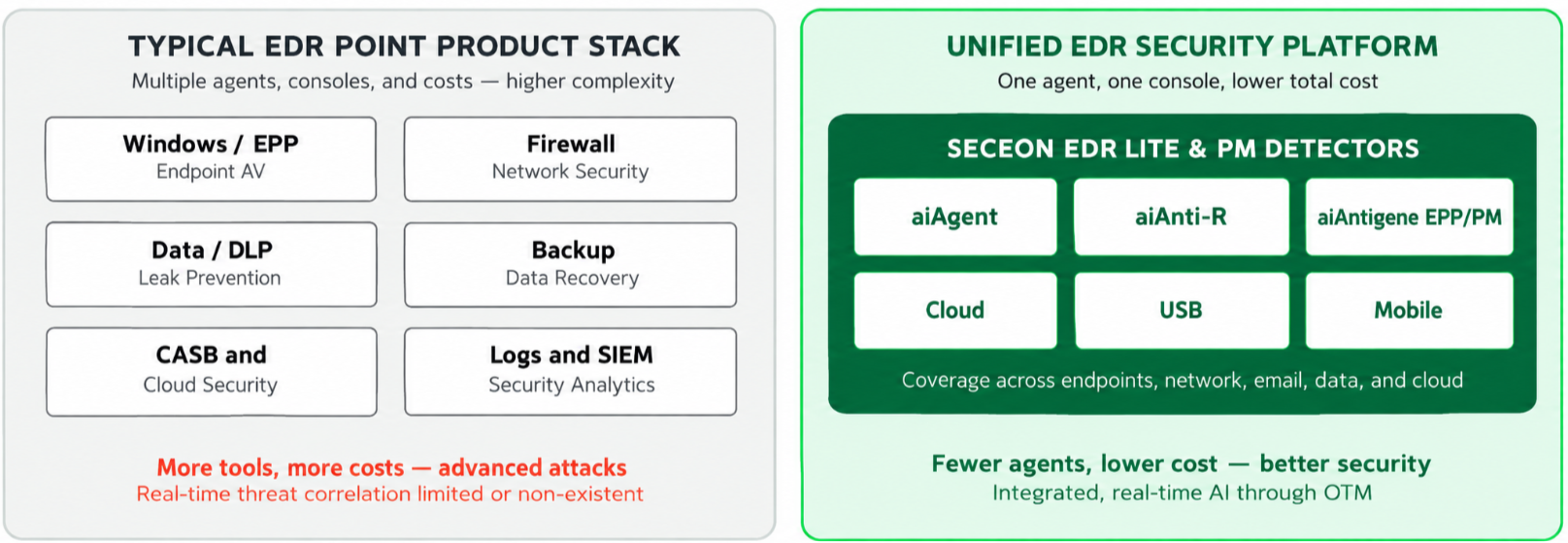
Figure 2. A typical SMB point-product stack compared with a unified platform
| Dimension | Point Products | Unified Platform (Seceon) |
| Consoles | One per tool | One |
| Correlation | Manual, across tools | Automatic across endpoint, network, data, and email |
| Response | Manual, tool by tool | Automated containment through native SOAR |
| Alert volume | High, unprioritized | Correlated, prioritized incidents |
| Compliance evidence | Collected manually from each tool | Generated from one platform |
| Licensing | Multiple vendors and renewals | One asset-based license |
| Scaling | Add more tools as needs grow | Same platform from SMB to mid-market |
Point products make sense when you need a single control quickly. As a business grows, adds cloud services, or faces customer and insurer requirements, the cost of managing gaps between tools usually exceeds the cost of a unified platform.
How Seceon Delivers Unified Cybersecurity for SMBs
The Seceon Open Threat Management (OTM) Platform gives small and mid-sized businesses the same AI-driven detection and automated response used by large enterprises and MSSPs, without enterprise complexity.
Endpoint protection with aiXDR-PMax
A single lightweight agent (under 50 MB, under 1% idle CPU) provides EDR, endpoint protection, data loss prevention, and file integrity monitoring across Windows, macOS, and Linux. Behavioral detection catches ransomware before encryption, along with fileless malware and credential theft.
Network security with built-in NDR
Seceon analyzes network traffic to detect lateral movement, command-and-control beaconing, and suspicious remote access. It also integrates with the firewalls SMBs already own, so response actions can block malicious traffic automatically.
Data protection built in
DLP monitors sensitive data movement, including customer records, payment data, and credentials. File integrity monitoring tracks changes to critical files. Device control and data classification add further protection for sensitive information.
Email and cloud visibility
Seceon monitors Microsoft 365, Google Workspace, and cloud platforms for suspicious logins and account takeover. aiEmail Security adds protection against phishing and business email compromise.
SIEM and automated response included
aiSIEM correlates endpoint, network, email, and cloud activity into prioritized incidents. Native aiSOAR automates containment, such as isolating a device or disabling a compromised account, in under 90 seconds. SeraAI, Seceon’s AI engine, autonomously resolves 70% or more of routine L1 alerts, which matters most when there is no dedicated SOC.
Compliance and posture evidence
aiCompliance CMX360 generates audit-ready evidence for frameworks such as PCI DSS, HIPAA, ISO/IEC 27001, and SOC 2, which helps with customer security questionnaires and audits. aiSecurityScore360, licensed separately, gives leadership a clear security posture score.
Predictable, asset-based pricing
Seceon uses asset-based licensing with core platform modules included. There are no per-GB ingestion charges or alert caps, so costs stay predictable as data grows.
Delivered your way
SMBs can run Seceon in-house or receive it as a fully managed service from an MSSP partner. Seceon is available through MSP marketplaces including ConnectWise, Kaseya, N-able, and Datto, and its multi-tenant architecture is built for providers serving many small businesses.
Seceon for SMBs at a glance
| SMB Requirement | Seceon Capability |
| Endpoint protection | aiXDR-PMax: EDR + EPP + DLP + FIM in one lightweight agent |
| Network security | Built-in NDR with firewall integration |
| Data protection | DLP, FIM, device control, and data classification |
| Email and identity | aiEmail Security; Microsoft 365, Google Workspace, and identity monitoring |
| Detection and response | aiSIEM + aiSOAR; automated containment under 90 seconds |
| Lean-team automation | SeraAI resolves 70%+ of routine L1 alerts autonomously |
| Compliance evidence | CMX360 audit-ready reporting |
| Pricing | Asset-based; no per-GB ingestion charges |
| Delivery | In-house SaaS or MSSP-managed; available via ConnectWise, Kaseya, N-able, Datto |
Capabilities per current Seceon product documentation; module availability can vary by package. Validate scope during evaluation.
Which SMB Cybersecurity Solution Should You Choose?
A point product or suite may fit if…
| Choose Seceon if…
|